onUnload="exitwindow()"

Pages

Showing posts with label : HYDROPONICS. Show all posts

Monday, October 31, 2011

Broccoli Grown in a Basement Grow Room in the Middle of Winter

if you’ve been through this hydroponics gardening site, you would be well aware that plants can be grown indoors at any time of the year using hydroponic technology.

This video is absolute proof of this, with a gentleman from the USA growing a 2.5 foot broccoli plant in his summer. He planted the seeds in early October, and is harvesting his broccoli head in the middle of December, some 60 days from planting.

The most fantastic part of this story is the fact that it’s -17C outside, where broccoli wouldn’t have a chance at growing at all, and the fresh broccoli plant can be eaten “out of season”.

We don’t know much about the specific type of hydroponics system that was used to grow this plant, however is was an indoor hydroponics garden as evidenced by the reflective wall coverings and the 90W LED grow lights that are also mentioned.

I would imagine that either an ebb and flow or an aeroponics type hydroponics system was used to grow these plants, which is what plants the size of broccoli would be most suited to.

The grower does mention a down side of growing broccoli in an indoor hydroponics garden, and that is the fact that the plant is so large. The plant that was harvested did take up most of the growing area, to the point that adjacent broccoli plants weren’t able to grow to their full extent. This means that a 2.5 square foot area was used to grow only one plant effectively.

This could be fixed by (obviously) planting smaller plant types, or by using some sort of vertical hydroponics setup where more plants could be grown in the same area footprint. Nonetheless, impressive growing!

articles source: hydroponicshabitat.com

Wednesday, October 19, 2011

Homemade Hydroponic Systems: MOTHER's Mini-Manual to Hydroponics


in hydroponics, flowers usually do not increase in garden soil. Alternatively, the vegetation is grown inside a h2o-structured moderate or any other increasing channels like coir, rockwool, and many others. Expanding facilities utilizing hydroponics is advantageous in towns, in which area is scarce. In addition, it positive aspects all those places the location where the garden soil is not conducive to growing plants.

Purpose of Hydroponic Nutrients

All plant life want the very same conditions to cultivate i.ourite. enough volume of gentle, waters, and mats to make their own personal foodstuff. For facilities escalating in ground, food is received by subscriber base in nutritional value with the soil. Considering that earth is absent in hydroponics, food ought to be directed at the plant utilizing a different way. That’s where hydroponic vitamins appear in. These nutritional requirements are specially formulated to serve your plants’ just about every need. An additional benefit is most nutritional requirements only have to be contained in normal water after which it furnished to the plants.

Picking out Hydroponic Nutrients

Most companies produce hydroponic nutrients. Some nutrition can be used general grow increase whilst some give attention to accomplishing precise final results like superior plants, fruits and veggies, and so on. It is possible to decide to make your own nutritious answer but it really is unlikely to be competitive with commercially ready shavers that are methodically ready and go through exacting testing. What follows is a help guide to a lot of the hydroponic vitamins readily available.

T.H Improve is a range of products and solutions created by Technaflora Vitamins and minerals. The T.Chemical. Expand hydroponic nutritional solution is derived from quite a few inorganic ingredients like potassium nitrate, magnesium mineral sulfate, boric chemical p, and so forth. which are required to healthful flower expansion.

pHat Hydro supplies high quality hydroponic nutritional requirements on your crops. An area of expertise of pHat solutions is they are presented as two-portion options. The methods can now be made use of at particular progress stages of your plant life period to improve the strength of the vitamins and minerals.

FoxFarm focuses primarily on hydroponic nutritional requirements geared towards growth of fruit and roses in plants. FoxFarm bags are totally natural and encourage rigorous growth of the vegetative regions of crops. Nitrogen may be the most important nutrient furnished by these methods, together with limited variety of minerals.

Mature Juices and Full bloom Juices from ESU Greenleaves is also nutritious alternatives aimed at development of fruit and bouquets. Mature Juices helps bring about growth of results in whilst Prosper Veggie juice is created to act through its heyday and fruiting steps. An added benefit for these vitamin alternatives is the coloring-dependent capability to test out the pH with the alternative when blended with normal water.

Canna’s range of hydroponic vitamins is created particularly for specific escalating sources. Though normal nutrients are also available, Canna includes a distinctive line of nutritional value for various substrates like grow rubble, rockwool, for example.

Increase the efficacy of hydroponic nutrition by offering development dietary supplements at specific phases of flower growth. General Hydro has growth supplements with supplements and growth hormones to grant crops an added improve while in crucial stages of increase.

Monday, October 17, 2011

hydroponics gardening guide how to prepare starter cubes


Starter cubes, used by hydroponic growers, as well as soil gardeners, are comfortable growing media for starting seeds. Made of inert material, starter cubes provide perfect support to the plant and its rhizomes. The cubes are capable of retaining water, but they do not supply a plant with any nutrients, unless the latter are dissolved in the water. Nowadays, there are 4 types of starter cubes: Organo-Cubes, Oasis cubes, Rockwool and “peat pots”. The most popular among the gardeners are the first three kinds of cubes (Organo-Cubes, Oasis cubes and Rockwool), while “peat pots” lose their popularity due to their tendency to accumulate too much water, which can spoil the seeds and the seedlings. Oasis cubes, Rockwool, and Organo-Cubes, on the other hand, retain water along with enough air, which prevents the medium to be too moist.

Preparing hydroponics starter cubes for the use depends on the type of the cube you have. For example, Organo-Cubes are ready for use, while Oasis cubes and Peat pots should be soaked in water (with pH adjusted to 6 – 6.5) before use. As soon as the cubes are saturated with water, they should be left to drain a bit, and then they are ready to be used. Rockwool is different, since it has high pH. Therefore, it should be soaked in water with pH adjusted to 5.0 in order for this acid solution to be balanced to the pH level required for the plants normal growing. These cubes should be soaked in water approximately for 24 hours, followed by the drainage prior to the use.

Having done these easy manipulations, the seeds can now be planted. Small holes about ¼ to ½ inch deep should be made in the cube with a tip of a pencil or a pen. Then seeds may be put into the holes and covered with some cube material from around those small openings.

It is best to keep the seed cubes moist, but not wet, always preventing them from staying in the water. The cubes do not need light until the seeds germinate. Similarly, no nutrients are necessary for the plants until they have their first true leaves developed. In this case a diluted nutrient solution


http://equalspec.com/hydroponics-gardening-guide-how-to-prepare-starter-cubes/

FAO to approve and partially finance hydroponics programme in Cape Verde

Praia, Cape Verde, 17 Oct – The United Nations’ Food and Agriculture Organisation (FAO) is set to approve and providing funding of US$430,000 for a hydroponics programme in Cape Verde, the representative of the FAO in Cape Verde, Frans Van de Ven said in Praia Sunday.

Speaking to Cape Verdean news agency Inforpress, Van de Ven said that the hydroponics project would involve 16 rural workers on all the islands of the archipelago with the exception of Sal and was aimed at increasing crop yield using less water.


According to Van de Ven, beneficiaries will make use of the experience of the Hydroponics School under construction in partnership with Spain and the FAO will also help them to set up a hydroponic production system by funding half of the total cost.

Speaking on World Food Day, the FAO representative said that the project for Improvement and Diversification of the Agricultural System in Cape Verde, which is officially in its final phase (three years), would be extended for another year because results had been “good” and also to take advantage of South/South cooperation with Cuba.

This project is a combination of providing funding to improve animal breeds, artificial insemination, construction of stables, introduction of hothouses, new horticultural varieties, drip irrigation systems and small community projects with South/South cooperation with Cuba, which has provided seven Cuban agri-livestock technicians.

With the aim of diversifying the Cape Verdean diet, the FAO has been helping the country to increasing fishing catches and production and has set up around 90 fish storage facilities on five islands, whilst also implementing a fish farming project.

source http://www.macauhub.com.mo/en/2011/10/17/fao-to-approve-and-partially-finance-hydroponics-programme-in-cape-verde/

Thursday, October 13, 2011

How long hydroponics growers can control their entire operation remotely?


With advanced hydroponic systems and the evolution of computer systems and programming, are growers are still relying on a very narrow field of environmental controllers?

Hydroponic systems have really developed over the last several periods of years. Hydroponic mediums like rockwool and coco coir have replaced sand and gravel; food grade polyethylene and polypropylene plastics have replaced PVC (polyvinyl chloride); and poor quality fertilizers have been replaced by pharmaceutical grade, easy-to-use nutrients and organic teas.

But, let’s consider all the recent technological advancement in our computers and phones. The desktop computer is now a second choice, behind laptops that offer more flexibility and the same capacity. Our mobile phones allow us to take our office anywhere. Tablets and pads are replacing spiral notebooks. The “cloud” allow us to access our information from any device, anywhere in the world where wifi is available.

So, I’m wondering why, with advanced hydroponic systems and the evolution of computer systems and programming, are growers are still relying on a very narrow field of environmental controllers? Many of these computers that regulate greenhouse temperature, humidity, and other conditions are still not digital, have limited capabilities and cost too much.

The primary reason for computer technology advancement is competition. Great companies like Apple and Google push each other to develop smaller instruments with more capabilities at even more affordable prices. This drive for success has prompted these companies to employ the brightest people from all over the world to predict and create the future. On the other hand, with a limited number of companies developing environmental control technology for commercial greenhouse controls, the competition for market share is not nearly as fierce. In the past, the market for environmental control was fairly limited, relying on a few greenhouse and grow room growers. But now, many more people are producing food at home and commercial crop production is moving into greenhouses and other forms of crop protection.

Imagine if Google, Apple, and Microsoft were all developing environmental controllers and applications for those controllers in competition for their market share. Imagine, instead of the controller telling the grower what the options of control were and only allowing you to set the parameters, the controller was more users friendly. You could tell it what to control, you could operate it from your mobile phone. You could use the same controller for your grow room as well as your commercial greenhouses, not only to control the environment, but everything from fertility to humidity and everything in between. Imagine if the cost of the equipment was a fraction of the cost it is today because the market competition drove the price down.

This is where the hydroponics industry needs to go. It’s true that crop production has evolved far beyond the simple seed-in-soil method of growing crops, and it’s true that there are increasingly sophisticated controls available for growers.

source http://pressreleaser.org/how-long-hydroponics-growers-can-control-their-entire-operation-remotely/1360068

Sunday, October 9, 2011

Veggies and Herbs That Grow in Hydroponic Tents


A survey conducted last year, found that a large number of people in the UK and Ireland are looking to adapt to a style of cooking where food can be sourced directly from the kitchen. In another 30 years, their idea of a green space extends beyond their garden, with the kitchen and garden merging as one. Thanks to the hydroponic technology, this dream isn’t unattainable. In fact, of late, the sale of hydroponic grow tents has seen a positive trend.
We aren’t new to the hydroponics technology; the Hanging Gardens of Babylon, as described by Greek historians Diodorus and Callisthenes describe a garden that modern scientists typify as vertical gardening.


For the uninitiated, the concept of hydroponics is the process of growing plants without the need for soil. Thus, instead of placing plants on a bed of soil, they are placed on a bed of nutrients and supported by water. Because vegetables are grown indoors with the help of an indoor light source, seasonal vegetables including the exotic ones can be grown all year round.

Besides helping gourmet restaurants with a year round supply of fancy ingredients, hydroponics also aims to serves a larger purpose; of helping countries battling a food crisis. For instance, the Child Development Support Corporation, which has a 250 square foot hydroponic garden, where vegetables are grown to be given away for their food pantry program. The technique is known to be very helping in drought conditions to not only feed humans but cattle and other livestock. Forage grown through the hydroponic system is known to be ready for harvesting in as little as a week to 10 days. In places where fertile land seems to be scarce, the technique is known to be used effectively by farmers.

There are several products that help people grow their vegetables through the hydroponic system. From grow lights to growing media products like Rockwool, coir etc. and plant nutrition products.

If you’ve heard about the technique, but don’t quite know how to go about growing vegetables in your kitchen, you can always sign up for the several courses on the internet. Most of them are free and held by people looking to share their knowledge and love for hydroponics.

If the technique were to gain mainstream popularity, growing food would no longer involve going to the local super market. It would just be a case of looking for the freshest of produce from the kitchen!

The hydroponics system is the perfect answer to the growing food crisis all over the world. Chris Scorthorne is an experienced horticulturist who has been writing extensively on hydroponic products including grow lights and hydroponic grow tents.

Thursday, October 6, 2011

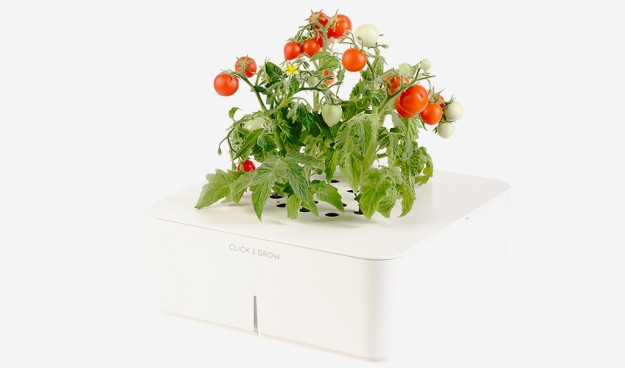
No green thumb needed with the Click & Grow electronic plant pot


Who needs a garden when you've got an electronic plant pot to grow you flowers? Check out the Click & Grow system, which allows users to grow flowers, basil, and tomatoes with only 4 AA batteries and a bottle of water.


The concept of a garden is appealing to many of us, but the idea of taking the time to care for a full garden? Not so much. For those of us who have busy lives and are lacking a green thumb (I’ve even killed a cactus or two), there aren’t many options. At least that’s what we thought until we saw the brilliant Click & Grow ($70), designed by Mattias Lepp. With a combination of aeroponics, hydroponics, sensors, processors, and software, Lepp created a electronic planting system that requires neither soil nor gardening talent. Each Click & Grow starter kit comes with the pot itself and a Busy Lizzy (impatients seeds) flower cartridge. Users then insert 4 AA batteries, fill the pot’s reservoir with bottled water, and place the pot in a place that receives indirect sunlight. After just two weeks, your plant should start to grow.

Users will have to refill the pot’s water reservoir about once every month, but the pot will display a notification so we’re hoping that most people can handle that kind of mild responsibility. The Click & Grow system is reusable as well. If you’d like to change out your plant, all you have to do is replace the cartridge, fill the reservoir again, and your magic plant will begin growing. The seed cartridges are available for about $10 in variations like French Marigold, Mini Tomatoes, Chilli Pepper, and Basil Mix. Whether you consider yourself a garden type or not, there’s nothing quite like having fresh flowers or useful plants like tomato and basil in your home to brighten things up.
source http://www.digitaltrends.com/lifestyle/no-green-thumb-needed-with-the-click-grow-electronic-plant-pot/

Maximizing Hydroponic Growth With Botanicare Nutrients


Botanicare nutrients are engineered from synthetics and organics to provide maximum benefit from both. They are one of the most comprehensive lines of nutrient supplements available for maximizing hydroponic plant health, yield and quality

Maximizing Hydroponic Growth With Botanicare Nutrients


Botanicare is a line of products for hydroponic gardeners from American Agritech. Like most hydroponic formulas, Botanicare nutrients are engineered from synthetics as well as organics in order to provide maximum benefit from both. Botanicare products are one of the most comprehensive lines of nutrient supplements available for maximizing hydroponic plant health, yield and quality, and are available all over the world through the company's international distribution network.

Among American Agritech's product offerings are Botanicare Cocogro and Botanicare Pure Blend Pro. The former, Botanicare Cocogro, is described by the company as "the world's most premium coir fiber" that is substantially lower in potassium and sodium. As the name suggests, Botanicare Cocogro is derived from the husks of coconuts. Coir fibers are the layer between the outer shell and the husk of the fruit (they are what give coconuts their "hairy" appearance). Because these have a relatively low cellulose content compared to say, cotton fibers, they are stronger and make for an ideal alternative to peat as a hydroponic medium and is resistant to the types of bacteria and fungi that are often a problem with sphagnum moss. Most of the coir fiber used in Botanicare Cocogro is imported from southern India, where it is allowed exposure to monsoon rains for least three years, and is available in a variety of packages.


Botanicare Pure-Blend Pro is an all-in-one solution made from organic substances. According to American Agritech, Botanicare Pure-Blend Pro is free of the harsh and toxic by-products such as urea and ammonium nitrate as well as heavy metals like mercury, selenium and even arsenic. The result is more energetic, viable plants. Incidentally, for those with traditional outdoor gardens, American Agritech also offers Botanicare Pure-Blend Pro for soil-cultivated plants as well.

Botanicare products appear to address one of the main problems with organic hydroponic nutrients, which is the fact that such nutrient formulas tend to clog hydroponic pump systems. Botanicare nutrients offer the best of both worlds: the health and environmental benefits of organics and the convenience of synthetics. It is not our place here to promote or advocate the use of Botanicare nutrients over other brands that are surely equally high in quality; however, if consumer reactions are any indication, it may well be worth your while to check out Botanicare and what this product line has to offer to your hydroponic endeavors.

Source: http://susanslobac.articlealley.com/maximizing-hydroponic-growth-with-botanicare-nutrients-819476.html

Wednesday, October 5, 2011

Crucial Function Of Phosphate In Hydroponic Fertilizers


Should you have a very backyard or desire to grow healthy plants but have inadequate soil composition you may use fertilizer to supplement the nutritional material. Not each and every fertilizer that you simply use has the proper mix for that which you want. Even so, most contain the same fundamental elements to expand healthful plants. It's crucial to know the part of phosphate in hydroponic fertilizers once you prepare on mixing it oneself or acquiring it from the local shop.

Certainly one of the most important benefits is that you do not even require soil to acquire large, strong nutritious foliage. But when you stay in locations where there exists bad nutritional value it can be costly to try to preserve incorporating it for the soil. You can't be certain that your crops will take in it for use. You can use pots or segregate it in a region especially to your things.

Phosphoric acid is the typical identify mainly employed to explain phosphate. Most nurseries, and also other residence growers make sure to incorporate this in the fertilizer when they start off off the plant from seed or to keep on the growth procedure. It really is recognized to enhance the well being in the plant. When employed properly it is possible to see what amount more substantial it becomes with continued use.

Phosphorous is an crucial component with the chemical processes that promote the improvement of flower web sites and buds. It really is also part of the root developing metabolic processes and performs a substantial role at a cellular stage by enabling biological thermodynamic transduction.

One among the key good reasons why it truly is utilized is that until you test your soil you do not know what values lie in it. Fruits, vegetables, crops and trees need to have diverse dietary quantities to stay nutritious. In the event you plant them in the floor they will should search for your nutritional value. When you include it right towards the plant it doesn't have to research for it. It might exert most of its vitality in increasing.

The three major components of any great fertilizer or combine will include nitrogen, potassium, and phosphorous. Even though phosphorous is vital diet potassium assists with all the measurement and good quality from the plants and trees that you simply grow. If there is certainly a deficiency of nitrogen you may see yellow leaves and poor development.

Most vegetation that have shallow roots that do nearly all of their progress above ground demand phosphorous. The key portion of beginning development transpires throughout photosynthesis. That is once the bulk of the energy is transferred. Early growth and root formation allows much more h2o to get absorbed.

As well a lot can generate troubles on your crops. It may be tough to obtain the ideal stability, but far more is not essential always far better. Algae grows when there is certainly an abundance of phosphate from the bordering drinking water and soil. Plants put out oxygen after they expand, but excess phosphorous results in a deficiency of oxygen in the soil.

The function of phosphate in hydroponic fertilizers could be helpful to permit you to have significant and wholesome vegetation. When your fruit and veggies are deficient and some thing appears to get missing it could be an absence of this mineral. It helps inside the early growth and formation with the seeds and plants throughout photosynthesis. But you need to be cautious that you just don't use much more than is necessary because it can produce an oxygen deficiency.


article source AMAZINES.COM

Monday, October 3, 2011

Learn How To Grow Delicious Strawberries With Hydroponics


Hydroponics is a method of growing plants without soil. This is the most modern technique that has blessed the agriculture industry with more yield and returns. Slowly and gradually the use of hydroponic systems in growing strawberries is increasing due to its promising benefits.

Previously it was believed that strawberry growth with hydroponic was not possible as wet feet are not favourable in the growth of strawberries. But once experienced, it the agriculturists accepted it because of the benefits.


The hydroponic method of growing strawberries is increasingly accepted worldwide as the previously used traditional method of cultivating strawberries was posing a threat to the environment. In the traditional method, the farmers need to use Methyl Bromide to fumigate the soil in order to protect the strawberries from parasites. But in 2005 the use of Methyl Bromide was banned due to its adverse effects on environment. Because of this hydroponics has proved to be a blessing for strawberries growing. The process not only gives more yields but it is also an environmentally friendly process.

How to grow hydroponic strawberries?

The process of growing strawberries hydroponically is quite simple and involves the following important steps:

· Cut runners from a mature plant to raise the saplings.

· Keep these cuttings in the Perlite to keep the rooting area humid. Wait for the roots to appear.

· Now dip the roots in microbial mixture, enclose it in plastic cover and refrigerate it for at least four to five months.

· After simulating the winter conditions, keep the saplings in the hydroponic system in a way that roots should sit in the solution. Do not forget to add the hydroponic nutrients to the system.

· The PH level should be from 5.8 to 6.2. To maintain this level, change the solution after every two weeks.

· When the flower opens, brush it to spread the pollens to stamens and pistils.

· Harvest the plant when it ripens.

Benefits of growing strawberries hydroponically:

Strawberries belong to the rose family which also includes apples, pears and plums. Enriched with Vitamin C, strawberries are very nutritious. They are said to have anti-cancer properties.

Following are the benefits of hydroponic grown strawberries against the traditional method of growing strawberries:

· It yields strawberries that are free of parasites and weeds.

· There is no danger of destruction by wild life.

· Strawberries can be produced hydroponically both indoor under artificial light and outdoor in sunlight.

· Temperature is very important for the growth of the strawberries as too much temperature can wilt the fruit and too less temperature will result in to poor fruit formation. With the perfect level of nutrition and temperature, hydroponic strawberries are big, juicy and spotless.

· By hydroponically growing the strawberries one can best utilize the space. They can be grown in piles to use the airspace. As water can reach to the high levels so you can grow stacks of strawberries as high as you want.

· The hydroponic growth of strawberries is not dependent on the season. They can be grown throughout the year.

So growing strawberries hydroponically allows the enjoyment of the true essence of fruit. Although it's initially a little capital intensive procedure it is offset by the high and healthy yield.

Article Source: http://EzineArticles.com/6197513

Hydroponics in Commercial Food Production


Commercial Hydroponics

With the first successful application of hydroponics techniques in the 1930s the stage was set for a paradigm shift in crop production from conventional geoponics or cultivation in soil to hydroponics or soil less cultivation. The first crops to be commercially harvested with hydroponics included tomatoes and peppers, but the techniques were soon successfully extended to other crops such as lettuce, cucumbers and others. It was not long before hydroponics techniques were successfully adapted even to cut flowers production; in fact any plant can today be grown hyrdroponically.

Commercial Systems Overview

Commercial hydroponics systems can be classified into bare root systems comprising nutrient film technique (NFT), deep flow and aeroponics systems and substrate systems.

Bare root systems do not use media to anchor the plant roots; the roots are left bare while in substrate systems plant roots are anchored in media such as perlite, vermiculite, sawdust, peat etc. Hydroponics is basically all about growing plants in a controlled environment and this is best provided outdoors in greenhouses that can incorporate several means to monitor, regulate and control the environment inside them. For instance, the air entering the greenhouse can be filtered to exclude entry to pests and parasites that can harm plant growth. Such means help provide optimal conditions for plant growth both in and out of season. In fact, hydroponics allows cultivation throughout the year which makes for year round availability of hydroponically grown produce at all major supermarkets across North America. Valued at 2.4 billion dollars the hydroponic greenhouse vegetable industry has a growth rate of 10 percent per year and accounts for nearly 95 percent of the greenhouse vegetables produced in North America.


Hydroponics Advantages

The extension of the growing season is not the only advantage contributing to the growing popularity of hydroponics production with both growers and consumers. There are several additional advantages as well including nutritious, healthy and clean produce, improved and consistent vegetable quality and elimination of the use of pesticides and herbicides. Pesticides and other chemicals used in conventional agriculture have an adverse environmental impact; the run off from these chemicals contaminate groundwater supplies. Commercial hydroponics systems eliminate these toxic chemicals and contribute substantially to keeping the groundwater free from contamination.

Yields

Commercial hydroponics systems have proved more productive than conventional systems of agriculture not only in the laboratory but even in actual practice. Most commercial hydroponics greenhouse facilities are built large to take advantage of economies of scale; typically these cover areas more than 10 acres while smaller ones measure around two acres. In the research greenhouse, yields with hydroponics techniques have averaged around 20 to 25% higher than in conventional soil cultivation. In actual commercial practice, however, over a number of years, the yield of hydroponically grown tomatoes can be more than double that of soil based systems due to the reduced turnover time between crops, better nutrition and crop management. Additionally commercial hydroponics growing techniques are also less demanding of chemicals for root zone sterilization and control of pests, weeds etc.

The dramatic increase in yields with hydroponics is best illustrated if we consider the actual production figures of soil grown and hydroponically grown produce. Field grown tomatoes average yields ranging between 40,000 to 60, 000 pounds per acre; on the other hand top growing hydroponics facilities in the US and Canada report average yields of more than 650,000 pounds of tomatoes per acre. Additionally, given the fact that only 10 years ago top hydroponics producers were producing around 400,000 pounds per acre, the increase in yields with improvements in growing practices has been truly phenomenal. Similar production figures can be quoted for other agricultural produce like cucumbers with 10,000 pounds per acre for field production and 200,000 per acre for hydroponic greenhouse yields. Hydroponics lettuce and pepper yields too average around four times the corresponding yields of agricultural production.

Global Trends

Given the number of advantages of hydroponics it is not surprising that hydroponics techniques are increasingly finding favor for commercial food production in many countries all over the world. According to recent estimates countries having substantial commercial hydroponics production include Israel - 30,000 acres, Holland 10,000 acres, England 4,200 acres and Australia and New Zealand around 8,000 acres between them. The fastest growing area for commercial vegetable greenhouses is Mexico. There are several reasons for this including free trade and favorable winter conditions that attract vegetable growers in large numbers. Mexico has summers that are considered hot in the summer, but with greenhouses located at the right altitudes vegetables can be grown in the hot summers as well as the cold winters. Though much of the produce comes from low tech plastic houses, many of these greenhouses use hydroponics technology, which indicates the growing popularity of hydroponics in commercial food production.

Pesticides and other chemicals used in conventional agriculture have an adverse environmental impact; the run off from these chemicals contaminate groundwater supplies. Commercial hydroponics systems eliminate these toxic chemicals and contribute substantially to keeping the groundwater free from contamination.


Article Source: http://EzineArticles.com/747248

Build A Fully Organic Hydroponics System


Hydroponics can be a great way to grow plants, but it can have its disadvantages. Maintaining consistent nutrient levels in the water can be a bit difficult for the average gardener. And for the organic gardener, supplying organic nutrients that are truly organic, just makes it that much more difficult. Aquaponics is a way to build a hydroponics system that is fully organic, and where the system takes care of nutrient levels itself.

Aquaponics is a blend of hydroponics and aquaculture. It just happens that the fish wastes created in aquaculture systems are full of organic plant nutrients. One of the big problems created by aquaculture is to somehow dispose of this nutrient rich fish water that eventually becomes toxic to the fish. One day someone go the brilliant idea to run it through an hydroponics system to let the plants utilize and filter these materials out of the water.


This creates a biological cycle between plants, fish and bacteria that clean up the fish wastes and convert them into plant nutrients. With this kind of system, you don't have to constantly monitor nutrient levels or flush the system to remove excess chemicals.

The plant roots filtering abilities eliminates any need for a mechanical filter for the fish, and the need to add fertilizer for the plants.

With aquaponics, the same water can be used over and over again, because the plants are that good at filtering the water. Because of this, aquaponics uses only about 2% of the water used in soil farming.

In a mature system, you typically don't have the swings in nutrient levels that you do with hydroponics. With aquaponics, if your plants are showing long term signs of lacking nutrients, that can often be solved by adding more fish. If nutrient levels are having a tendency to run too high, you can either harvest more fish, or add another grow bed and more plants to the system. This system is truly organic and it is shown in the quality of the food produced.

With aquaponics, you have the ability to produce better quality plants with less work, plus you produce fish too, all with the same resources. Farm raised fish are increasing in demand, especially domestic produced fish that are known to be from a clean source. There are many opportunities for fish including food, breeding fish for aquariums, other aquaponics growers and for stocking ponds.

If you are interesting in building a hydroponics system, or already have one, try adding a fish tank to it. You will likely see better quality plants and vegetables, and eliminate the hassles of adding fertilizer and constantly monitoring the chemical levels. Plus you will be able to produce clean, fresh, organically grown fish.


Article Source: http://EzineArticles.com/5906353

Saturday, October 1, 2011

WATER OF LIFE-key h2o facts for your hydroponic system

Hydroponics, as a system of growing based upon water (just look at the etymology) is understandably based upon H2O. Ultimately the quality and temperature of your water is important if you want to raise healthy plants and bumper crops, both will be explored below.


Most water in our houses is affected by calcium and magnesium levels, too much of which can cause hard water and limescale (limescale being a deposit including calcium carbonate) which in turn is pretty bad for your plants. Fortunately to find out the levels of salt, magnesium and calcium in your water it is possible to buy testing kits, or even send a sample away o a laboratory.

If you do find that you have excess hard water and this is harming your plants, restricting their ability to withstand and recover from disease, you can treat your water with softening agents specifically created for hydroponic systems. Another option is to collect rain water in a butt or to use a filtration system. Commonly however, many gardeners advice that using spring or mineral water should be avoided as this can actually end up poising your plants by unbalancing the nutrient solution.

Also important is the temperature of your water as if it is outside of a specific range the plants can suffer. Typically a temperature between 18⁰C-26⁰C (65⁰F-80⁰F) is suitable, it should be remembered that before adding new water, leaving it out to reach the same temperature as the water in the reservoir is advisable as sudden changes in temperature are not good for plants. In order to keep the water in your hydroponics system in this range it may be worth buying an aquarium heater for winter months and even a cooler for the summer (although in the UK this is probably less of a problem!).

Both water quality and temperature are key to giving your plants a nutrient solution that they can use effectively to grow and flourish, by understanding these principles it should be possible to have an efficient hydroponics system.

AERICLE SOURCE http://hydroponicsguide.co.uk/0052/hydroponics/water-of-life-%E2%80%93-key-h2o-facts-for-your-hydroponic-system