onUnload="exitwindow()"

Pages

Showing posts with label Hydroponic Gardening guides. Show all posts

Monday, October 24, 2011

What Are Net Pots?


If you are a gardener, then you might be familiar with net pots. Net pots are plant containers that have holes in the bottom and sides, and are similar in appearance to a kitchen strainer. Netting is used inside the container, and this allows the plant’s roots to easily grow through the netting and out the holes on the bottoms and sides of the container. Net pots are used for hydroponic gardening systems as well as for aeroponic gardening.


It is easy to use net pots for hydroponics. One of the benefits of using net pots for hydroponics is that the netting keeps your growing medium in place, and thus it allows you to use any type of grow medium that you prefer. The hydroponics system that you choose for indoor gardening allows for flexibility on the amount of space that you have to devote to indoor gardening, as well as the types of equipment you will need to get started. Essentially, all hydroponics system solutions consist of plants grown in a soilless medium. Hydroponic nutrient solution is regularly applied to the plant roots. The type of hydroponic nutrient that your plants will need varies according to the plants and their stage of growth; you will find specific formulations for any indoor gardening need readily available.

Other indoor gardening supplies that you will need for hydroponic gardening include some type of reservoir, a tray, and a pump and aerator. The reservoir holds the nutrient solution, and the tray holds the plants. A pump is one of the key indoor gardening supplies used to get the nutrient to the tray in a variety of ways, and the aerator helps to keep the solution oxygenated, because plants need oxygen for good growth and development. Other indoor gardening supplies that you will need include the nutrients for your plants. These are dissolved in water to form a solution that is taken up by the plant roots.

Net pots are also used for aeroponic gardening. The pot with the netting inside it holds the crown of the plant together, allowing the roots to dangle in the air. Misters spray the roots with nutrient solution, thereby feeding the plants. The plants in this type of gardening setup also benefit from the great oxygenation that the entire plant enjoys, allowing the plants to grow quickly to maturity without the common pests and diseases wreaking havoc, as they often do in soil gardening situations.

Net pots for hydroponics, as well as hydroponic and aeroponic gardening system kits, are available from online hydroponic gardening merchants.


http://www.thealternativegardener.com/aeroponics/aeroponic-articles/what-are-net-pots/

Monday, October 3, 2011

Learn How To Grow Delicious Strawberries With Hydroponics


Hydroponics is a method of growing plants without soil. This is the most modern technique that has blessed the agriculture industry with more yield and returns. Slowly and gradually the use of hydroponic systems in growing strawberries is increasing due to its promising benefits.

Previously it was believed that strawberry growth with hydroponic was not possible as wet feet are not favourable in the growth of strawberries. But once experienced, it the agriculturists accepted it because of the benefits.


The hydroponic method of growing strawberries is increasingly accepted worldwide as the previously used traditional method of cultivating strawberries was posing a threat to the environment. In the traditional method, the farmers need to use Methyl Bromide to fumigate the soil in order to protect the strawberries from parasites. But in 2005 the use of Methyl Bromide was banned due to its adverse effects on environment. Because of this hydroponics has proved to be a blessing for strawberries growing. The process not only gives more yields but it is also an environmentally friendly process.

How to grow hydroponic strawberries?

The process of growing strawberries hydroponically is quite simple and involves the following important steps:

· Cut runners from a mature plant to raise the saplings.

· Keep these cuttings in the Perlite to keep the rooting area humid. Wait for the roots to appear.

· Now dip the roots in microbial mixture, enclose it in plastic cover and refrigerate it for at least four to five months.

· After simulating the winter conditions, keep the saplings in the hydroponic system in a way that roots should sit in the solution. Do not forget to add the hydroponic nutrients to the system.

· The PH level should be from 5.8 to 6.2. To maintain this level, change the solution after every two weeks.

· When the flower opens, brush it to spread the pollens to stamens and pistils.

· Harvest the plant when it ripens.

Benefits of growing strawberries hydroponically:

Strawberries belong to the rose family which also includes apples, pears and plums. Enriched with Vitamin C, strawberries are very nutritious. They are said to have anti-cancer properties.

Following are the benefits of hydroponic grown strawberries against the traditional method of growing strawberries:

· It yields strawberries that are free of parasites and weeds.

· There is no danger of destruction by wild life.

· Strawberries can be produced hydroponically both indoor under artificial light and outdoor in sunlight.

· Temperature is very important for the growth of the strawberries as too much temperature can wilt the fruit and too less temperature will result in to poor fruit formation. With the perfect level of nutrition and temperature, hydroponic strawberries are big, juicy and spotless.

· By hydroponically growing the strawberries one can best utilize the space. They can be grown in piles to use the airspace. As water can reach to the high levels so you can grow stacks of strawberries as high as you want.

· The hydroponic growth of strawberries is not dependent on the season. They can be grown throughout the year.

So growing strawberries hydroponically allows the enjoyment of the true essence of fruit. Although it's initially a little capital intensive procedure it is offset by the high and healthy yield.

Article Source: http://EzineArticles.com/6197513

Thursday, September 29, 2011

Getting the roots of the problem

When you have your hydroponics system set up you are continually checking your pH levels, your nutrient solution and grow room conditions it is easy to forget about your roots. The roots of your plants however are like their mouths and understandably ensuring they are healthy and functioning properly is key to ensuring the health of your plants.


Rootbound is a common problem and results when your plants’ roots do not have enough space in which to grow and develop. This in turn stunts the growth of your plants and can have a dramatic effect upon the size of your yields; in the worst circumstances it can even led to the death of plants.


Rootbound will typically occur when your plant pots are too small for your plants, causing the roots to deform and become entwined with each other. This reduces the space from which the roots can draw nutrients and subsequently reduces nutrient absorption and eventually growth. It can however be prevented by having various sizes of pots and transferring your plants as they grow.


If you want to spot if your plants are rootbound you should look for yellowing or browning leaves which are beginning to curl. These symptoms aren’t exclusive to rootbound and may indicate other problems such as insects or even root diseases like Pythium root rot.


The best course of action to prevent rootbound and other problems is to check your plants regularly, looking for roots that are tightly bundled (rootbound) or dark brown (rotting). If your plants are beginning to outgrow their pots it is time to change them, if they are infected however, you will have to clean the system in its entirety with bleach, ensuring that it is thoroughly rinsed afterwards. You may even want to replace some of the harder to clean items and also add a plant immune booster to your nutrient solution.


Checking your roots regularly is the best way to prevent them becoming cramped and diseased. As always with hydroponics prevention is better than cure if you want healthy plants and bumper yields.

article source: hydroponicsguide.co.uk

Hydroponics Grow Box

Growing with hydroponics is easier than growing in the field.

If you have decided grow your own plants, then you have a decision to make right now. Do you want to grow your plants indoors with hydroponics, or do you want to grow your plants outdoors in nature. There are many advantages and disadvantages to growing outdoors versus indoors with hydroponics. This article will discuss the differences between growing indoors with hydroponics and growing outdoors with soil, and the many advantages of growing indoors with hydroponics versus growing with soil.


Let's begin by talking about gardening outdoors. Gardening outdoors has a lot to the advantages and disadvantages versus growing indoors with hydroponics. First we'll talk about some of the advantages of growing outdoors. That's the sun. This sun is the most powerful light bulb you will ever find. The amount of lumens of the sun puts out is not matched by any light bulb that man can manufacture. Meaning that plants grown in nature with direct sunlight will be able to grow like monsters. The sun doesn't cost you anything. Light bulbs can get a little pricey versus this sun which is in a huge source of free energy, if you own a good piece of land that is.

When you grow in nature you have to deal with bringing water to your plants. You'll have to build an irrigation system of some sort to make sure that fresh water is getting to your garden. Whether you bring that water in from a river with a pump and generator, or manually water your garden every couple days this will take some work setting up. Also when growing outdoors you never know who might come across your garden and trespass. Often animals will eat up your fresh fruits and vegetables that you have spent so much time growing. Not to mention the outdoor pests that will attack your outdoor garden and cripple your crops.

However you can consider growing indoors with hydroponics using a grow box. If you do grow indoors with hydroponics I would highly recommend purchasing a prebuilt hydroponics grow box to grow your indoor garden all year long with ease. A hydroponics grow box is a machine that is constructed specifically for the purpose of growing plants hydroponically indoors with no mess and not a hike away. A grow boxes will often contain a light, a hydroponics, system of some type, and timers, as well as the nutrients and everything you need to grow a plants in a self contained grow cabinet. The grow boxes are shipped assembled and ready to use when you get them so no problems setting them up like the outdoor garden which takes a lot of time to prepare, working in the hot sun. All you have to do is simply move the grow box into a room and you're ready to grow after you plug it in.

With a hydroponics grow box you have complete control over your grow. You are not relying on nature or the sun's seasons, so you can set your timers for maximum growth and forget it. You have complete control over when the plant gets water using the water pumps. You have more control over your hydroponics grow when you know that you won't have rodents, and other types of intruders. So growing indoors becomes more convenient, safer, and a lot cleaner than growing outdoors in soil. When you consider that the yield you get indoors is every bit as big as the yield you can get outdoors it's a no-brainer. Growing indoors with hydroponics is the way to go...

Article Source: http://EzineArticles.com/3117458

Wednesday, September 28, 2011

Hydroponics Systems and Other Considerations

Hydroponics<n most hydroponic systems grow trays come equipped with top of the line tub outlet drain fitting, allowing users to install a stand-off to adjust the solution level in the tray. The hydroponics system is equipped with a drain to handle high volumes of water.

The hydroponic system includes a channel-like trough formed of extruded plastic, the trough having parallel side walls and an orthogonal bottom wall defining an upwardly opening coffer. A pair of oblique walls extend integrally from a medial portion of the bottom wall to a respective medial portion of the side walls to define a V-shaped bottom in the interior of the trough.

The hydroponic system you set up is going to be on a strict watering schedule that is set by you, and which you must follow rigorously for the good of your plants. This will prevent your plants from getting too little or too much water.

The hydroponic system in my house is set up in a walk-in incubator in which the temperature was kept at 25 degrees C. Eight polycarbonate hydroponic trays (27 cm long by 21 cm wide by 14 cm deep), each designed to hold 12 plants, were used.

The hydroponic system mainly consists of culture containers and mineral wool slabs. The hydroponic system is used within a controlled-environment room (CER) for control of the aerial environment. The growing shed/incubator is equipped with an auto calibrating system for atmospheric CO2 control.

Plants grown in soil-free gardens have the perfect balance of nutrients and water delivered directly to their roots when the best nutrient feed products are used. Crops are not forced to expand their limited energy searching for water and food. Plants in the famous, NASA originated, aeroponic system showed increased vegetative growth, delayed tuber formation and an extended vegetative cycle of about seven months after transplanting.

Plants grown in pots usually hit growth plateaus when they become root-bound, requiring messy and difficult transplanting. A properly designed hydroponic system can avoid this and many other problems commonly found with soil pests are simply non-existent. However, Both hydroponic and soil-grown plants need 16 elements in order to grow. The top three elements, known as macronutrients, include nitrogen, phosphorous, and potassium. Three other elements essential to plant growth, known as secondary nutrients, are calcium, sulfur, and magnesium. The remaining nutrients are called micronutrients. All sixteen of these nutrients are vital to any growing system. In any good hydroponic system, the plant receives all these elements in its water.

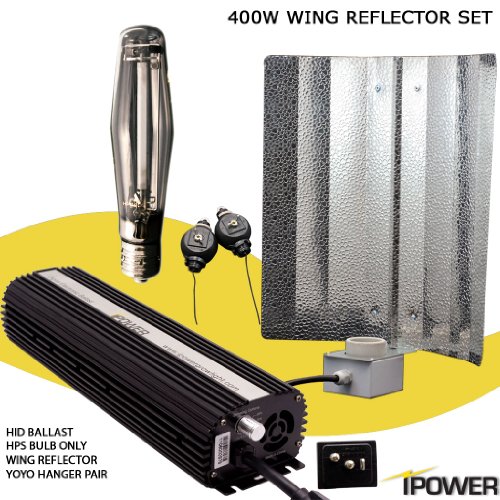
Plants thrive even with such a small root volume because just the right amount of water containing a soluble fertilizer is continually dripped into the medium. Plants require light in order to photosynthesize, so if your hydroponic garden is an indoor garden then you may consider using artificial light. A regular light bulb will not be any good in this situation.

Hydroponics LED Grow Lights - Is Our Dissatisfaction Our Own Fault?

We all grew up in Hydroponics using HID grow lights, even though we know the heat and high cost disadvantages. And, to be honest, the technology of LED Grow Lights years ago was not very good or effective for growing Hydroponics plants.

Technology for LED grow lights has improved, and manufacturers have improved the quality and spectrum. So why are so many of us still unhappy with the results, or still afraid to install LEDs as our Hydroponic lighting system?

We have all learned how to maintain Hydroponics plants grown under intense HID lights, what to do about the heat output, plant nutrients, and watering cycles. Why should anything change?

There are two big differences between HID and LED grow lights for Hydroponic lighting; the heat output and the "viewed" light intensity. There is relatively no heat output from an LED grow light, and the light intensity is based on Hydroponics plant requirements, not what our human eye perceives.

Heat from HID grow lights in an indoor grow room affects plant nutrients and watering cycles, just as if your Hydroponics plants were growing outdoors in the hot sun. Take away the heat, and plants do not need as much watering or plant nutrients.

But have you changed your routine after installing LED grow lights? Many customers I have talked to did not, and they lost their plants. When you purchase LED lights, you need to go back to square one using your Hydroponic meters for moisture and plant nutrients strength. You cannot keep the same routine and schedule; you will lose your Hydroponics plants from over-watering or overfeeding.

Over-watering will slow root development or cause root rot, stunt plant growth, and cause plant nutrient uptake issues. Check to see if the soil is drying out before watering again. Use porous grow medium, which will allow more oxygen to reach roots, increase plant metabolism and growth, and will help avoid over-watering problems.

Plant nutrients also must be adjusted in order to not over fertilize, which can also be deadly to Hydroponics plants. Start with a smaller amount of plant nutrients, around half of the amount recommended by the manufacturer. Keep a close eye on the growth pattern and color of your Hydroponics plants and adjust the plant nutrients until the growth rate and color are normal. It is absolutely a pleasant benefit to save money on water and plant nutrient costs also.

Light intensity from an LED grow light is a big difference also. LEDs do not give off a bright light glare like HIDs and electric lights have, which does not mean they are not good for your Hydroponics plants. The spectrum provided for the Hydroponics plants is, again, more like growing your plants outdoors in soil and sun. The plants will grow a little slower, which will take more patience. However, since the spectrum provided by LED lights is more specific to your Hydroponics plants needs, they will absorb the light they require and grow healthier.

Most manufacturing specs show an allowable height of 6' to hang your LED grow lights from your plants. The proper height for maximum benefits when growing tall Hydroponics plants should not exceed around 3'. If you keep your plants pruned and cropped, the light intensity will be strong enough to cover the plant canopy from top to bottom for 5' Hydroponics plants, which is what we all strive for.

If you feel more comfortable with a transition while you convert from HIDs to LEDs, you can experiment with your Hydroponic lighting until you achieve the exact results you are looking for. Use your HID lights for a few hours each day, then use your LED lights for about 10 hours a day. The money you save will still be close to 50%, your HID bulbs will last longer, and your Hydroponics plants will receive the spectrum advantages from LED grow lights. There are also some experiments being conducted, with some initial success, with running the LED grow lights for 24 hours a day, and seeing up to 40% more growth. The Hydroponics plants did not seem to be affected without the day/night cycles.

Give LED grow lights a chance. Get to know their quirks and capabilities, just like we had to do with HID grow lights. Change your Hydroponic lighting to LEDs or a combination of both, change your plant maintenance habits, and save that money every month. With proper installation and plant maintenance, you will become a believer in LED grow lights!

Using a LED grow light properly will produce healthy Hydroponics plants and save you up to 80% in electric costs, in addition to the savings realized from bulb replacement, grow ballasts, large light reflectors, plant nutrients and water. Hydroponics and LED lights are the future for gardening and crops.


Article Source: http://EzineArticles.com/3797336

Thursday, September 22, 2011

Hydroponic Gardening - Common Problems found by the Starter

it is not difficult to get your hydroponic system set up. Most of the Hydroponic Gardening guides, especially those for beginners, include a section on build-it-yourself hydroponic systems. They provide a parts list, a tools list, and simple step-by-step instruction on how to build your own hydroponic system.

However, once the hydroponic unit is in operation, quite often, the beginners will discover problems, some may not be easily solved after the system has already been built. Therefore, while you are planning for your hydroponic system, it is always good to know the problems usually encountered by beginners. They may have influences to your requirements or ultimately design of your hydroponic system. The followings are some of the examples.

  Problem#1 There is a concern on just how much nutrients to be poured over the aggregate. Because for those hydroponic systems using a "light proof" container concept, you will not be able to see through the containers or down through the aggregate. So it is very difficult to gauge the amount or level of nutrient solution. Without this visibility, the plants may likely be killed by either under or overfilling. The viable solutions can be either put a visual indicator showing the nutrient solution level or water sensors for automatic system.


Problem#2 The second problem is how often to pour nutrient over the aggregate. If you just follow the interval for your normal house plants in soil, for an example, three to five times a week, you would probably kill your hydroponic plants. For hydroponics, because of the wider air gap in the aggregate as compared to soil, the nutrient solution will tend to evaporate from the aggregate much more quickly than water from soil. So in general, you would need to supply nutrient to your plants at least once a day. The more simple the system, the more frequently you will have to be around to add nutrient solution. The interval can be anywhere from one to four times a day depending on several factors, such as light, temperature, humidity, type and size of your plants, and the size of your container. This means that you cannot even go away for a weekend or your hydroponic plants would begin to suffer. The solutions to this problem are either to get someone to "feed" the plants for you whenever you are away for more than a day or to have your hydroponic system automated.

  Problem#3 A third problem involves proper aeration (or supply of air or oxygen) for the plants' roots. This area usually is not a concern for soil gardening in the backyard because worms perform this function. In some hydroponic system, particularly those using PVC pipes with holes drilled for plants, too often the roots clog up the waterways and aeration in the root zone may become a problem.

 Different systems will have different ways of providing proper aeration, for examples, using pumps, raised platforms or specific aggregate suitable for hydroponics.

 Simple Problems?

 To some people, these problems seem to be a matter of common sense. However, if you are new to this soil-less gardening concept and without going through the actual exercise once, you are likely to discover a lot of trivial problems like those mentioned if you do not have a good planning.

 Read More Before Implementing

 Therefore, before building your own hydroponic system, it is always a good idea to begin with reading hydroponics beginner's guides. Take your time to read and fully understand the concept as well as the benefits and drawbacks of different types of hydroponic systems. Personally, I recommend reading at least three books because different books focus on different aspects of hydroponics based on authors' experiences.

 Besides reading guides, you can also get valuable information by visiting discussion forums related to hydroponic gardening on the internet.

 Once you have enough information and more importantly understand you own needs or requirements, then you can start building your own hydroponic gardening system and have fun with it.

 I have reviewed a good beginner's guide as well as some basic information on Hydroponic Gardening, you can visit the website at www.howtohydroponicgarden.com to find more about this guide.