onUnload="exitwindow()"

Pages

Showing posts with label growing Hydroponics plant. Show all posts

Wednesday, October 12, 2011

Organic Hydroponic Nutrients – the Main Advantages


A lot of people are under the mistaken impression that hydroponic growing and organic growing can never go together. But just because you aren’t using soil to grow your plants, and may be growing indoors, that doesn’t mean that you can’t use organic nutrients. In fact, organic fertilizers like guano, kelp, and worm castings can prove to be wonderfully effective in any hydroponic garden.


Here of some of the most powerful reasons why you should really consider using organic hydroponic nutrients in your garden.

Little Risk of “Nutrient Burn” - While there is no denying that synthetic hydroponic nutrients can create some amazing yields, it has to be done very carefully. If you are little too sloppy with your measurements, or accidentally make your nutrient solution too dense, you run to the rink of “burning” your roots from over fertilizing.
This is much less of a concern with organic hydroponic nutrients. Since they are completely natural and derived form natural risk, there is a greater margin or error. There is a lot smaller risk of ever using too much of these nutrients, so you don’t have to worry quite as much about using too much of the fertilizer.

Good Microbe Environment - One of the most powerful hydroponic supplements that you can use in your garden is beneficial microbes. These are mostly used as a root booster, but they have a number of other advantages as well. While they can be powerful, you need to make certain that you give the best possible environment for your bacteria to thrive.

One of the best ways to ensure that really beneficial microbe environment is using organic hydroponic nutrients. They are often loaded with a lot of carbohydrates and other materials that beneficial microbes can use to grow and thrive. This can save you a lot of money and help make your microbes be a lot more effective.

Increased Nutrients - There are some studies that suggest that using organic hydroponic can actually increase the nutrient and mineral levels in your hydroponically grown fruits and vegetables. This increased overall levels of vitamins, minerals, and antioxidants means that your produce will be a lot healthier. While hydroponically grown produce is already a lot healthier for you than the produce that you might find in your grocer store’s produce aisle, using organic hydroponic nutrients can really push your nutrient over the top.

Fetch a Higher Price - If you grow hydroponically for a profit, you can proudly note that your fruits, vegetables or flowers were grown using only organic hydroponic nutrients. As you may have noticed when you go down to the grocery store, things that are grown organically always fetch a higher price than those items grown with synthetic nutrients and pesticides. This will also allow you to tap into a niche market, and maybe even find that you can sell more of your product just by advertising that you use organic ingredients.

Monday, October 3, 2011

Hydroponics in Commercial Food Production


Commercial Hydroponics

With the first successful application of hydroponics techniques in the 1930s the stage was set for a paradigm shift in crop production from conventional geoponics or cultivation in soil to hydroponics or soil less cultivation. The first crops to be commercially harvested with hydroponics included tomatoes and peppers, but the techniques were soon successfully extended to other crops such as lettuce, cucumbers and others. It was not long before hydroponics techniques were successfully adapted even to cut flowers production; in fact any plant can today be grown hyrdroponically.

Commercial Systems Overview

Commercial hydroponics systems can be classified into bare root systems comprising nutrient film technique (NFT), deep flow and aeroponics systems and substrate systems.

Bare root systems do not use media to anchor the plant roots; the roots are left bare while in substrate systems plant roots are anchored in media such as perlite, vermiculite, sawdust, peat etc. Hydroponics is basically all about growing plants in a controlled environment and this is best provided outdoors in greenhouses that can incorporate several means to monitor, regulate and control the environment inside them. For instance, the air entering the greenhouse can be filtered to exclude entry to pests and parasites that can harm plant growth. Such means help provide optimal conditions for plant growth both in and out of season. In fact, hydroponics allows cultivation throughout the year which makes for year round availability of hydroponically grown produce at all major supermarkets across North America. Valued at 2.4 billion dollars the hydroponic greenhouse vegetable industry has a growth rate of 10 percent per year and accounts for nearly 95 percent of the greenhouse vegetables produced in North America.


Hydroponics Advantages

The extension of the growing season is not the only advantage contributing to the growing popularity of hydroponics production with both growers and consumers. There are several additional advantages as well including nutritious, healthy and clean produce, improved and consistent vegetable quality and elimination of the use of pesticides and herbicides. Pesticides and other chemicals used in conventional agriculture have an adverse environmental impact; the run off from these chemicals contaminate groundwater supplies. Commercial hydroponics systems eliminate these toxic chemicals and contribute substantially to keeping the groundwater free from contamination.

Yields

Commercial hydroponics systems have proved more productive than conventional systems of agriculture not only in the laboratory but even in actual practice. Most commercial hydroponics greenhouse facilities are built large to take advantage of economies of scale; typically these cover areas more than 10 acres while smaller ones measure around two acres. In the research greenhouse, yields with hydroponics techniques have averaged around 20 to 25% higher than in conventional soil cultivation. In actual commercial practice, however, over a number of years, the yield of hydroponically grown tomatoes can be more than double that of soil based systems due to the reduced turnover time between crops, better nutrition and crop management. Additionally commercial hydroponics growing techniques are also less demanding of chemicals for root zone sterilization and control of pests, weeds etc.

The dramatic increase in yields with hydroponics is best illustrated if we consider the actual production figures of soil grown and hydroponically grown produce. Field grown tomatoes average yields ranging between 40,000 to 60, 000 pounds per acre; on the other hand top growing hydroponics facilities in the US and Canada report average yields of more than 650,000 pounds of tomatoes per acre. Additionally, given the fact that only 10 years ago top hydroponics producers were producing around 400,000 pounds per acre, the increase in yields with improvements in growing practices has been truly phenomenal. Similar production figures can be quoted for other agricultural produce like cucumbers with 10,000 pounds per acre for field production and 200,000 per acre for hydroponic greenhouse yields. Hydroponics lettuce and pepper yields too average around four times the corresponding yields of agricultural production.

Global Trends

Given the number of advantages of hydroponics it is not surprising that hydroponics techniques are increasingly finding favor for commercial food production in many countries all over the world. According to recent estimates countries having substantial commercial hydroponics production include Israel - 30,000 acres, Holland 10,000 acres, England 4,200 acres and Australia and New Zealand around 8,000 acres between them. The fastest growing area for commercial vegetable greenhouses is Mexico. There are several reasons for this including free trade and favorable winter conditions that attract vegetable growers in large numbers. Mexico has summers that are considered hot in the summer, but with greenhouses located at the right altitudes vegetables can be grown in the hot summers as well as the cold winters. Though much of the produce comes from low tech plastic houses, many of these greenhouses use hydroponics technology, which indicates the growing popularity of hydroponics in commercial food production.

Pesticides and other chemicals used in conventional agriculture have an adverse environmental impact; the run off from these chemicals contaminate groundwater supplies. Commercial hydroponics systems eliminate these toxic chemicals and contribute substantially to keeping the groundwater free from contamination.


Article Source: http://EzineArticles.com/747248

Build A Fully Organic Hydroponics System


Hydroponics can be a great way to grow plants, but it can have its disadvantages. Maintaining consistent nutrient levels in the water can be a bit difficult for the average gardener. And for the organic gardener, supplying organic nutrients that are truly organic, just makes it that much more difficult. Aquaponics is a way to build a hydroponics system that is fully organic, and where the system takes care of nutrient levels itself.

Aquaponics is a blend of hydroponics and aquaculture. It just happens that the fish wastes created in aquaculture systems are full of organic plant nutrients. One of the big problems created by aquaculture is to somehow dispose of this nutrient rich fish water that eventually becomes toxic to the fish. One day someone go the brilliant idea to run it through an hydroponics system to let the plants utilize and filter these materials out of the water.


This creates a biological cycle between plants, fish and bacteria that clean up the fish wastes and convert them into plant nutrients. With this kind of system, you don't have to constantly monitor nutrient levels or flush the system to remove excess chemicals.

The plant roots filtering abilities eliminates any need for a mechanical filter for the fish, and the need to add fertilizer for the plants.

With aquaponics, the same water can be used over and over again, because the plants are that good at filtering the water. Because of this, aquaponics uses only about 2% of the water used in soil farming.

In a mature system, you typically don't have the swings in nutrient levels that you do with hydroponics. With aquaponics, if your plants are showing long term signs of lacking nutrients, that can often be solved by adding more fish. If nutrient levels are having a tendency to run too high, you can either harvest more fish, or add another grow bed and more plants to the system. This system is truly organic and it is shown in the quality of the food produced.

With aquaponics, you have the ability to produce better quality plants with less work, plus you produce fish too, all with the same resources. Farm raised fish are increasing in demand, especially domestic produced fish that are known to be from a clean source. There are many opportunities for fish including food, breeding fish for aquariums, other aquaponics growers and for stocking ponds.

If you are interesting in building a hydroponics system, or already have one, try adding a fish tank to it. You will likely see better quality plants and vegetables, and eliminate the hassles of adding fertilizer and constantly monitoring the chemical levels. Plus you will be able to produce clean, fresh, organically grown fish.


Article Source: http://EzineArticles.com/5906353

Thursday, September 29, 2011

Getting the roots of the problem

When you have your hydroponics system set up you are continually checking your pH levels, your nutrient solution and grow room conditions it is easy to forget about your roots. The roots of your plants however are like their mouths and understandably ensuring they are healthy and functioning properly is key to ensuring the health of your plants.


Rootbound is a common problem and results when your plants’ roots do not have enough space in which to grow and develop. This in turn stunts the growth of your plants and can have a dramatic effect upon the size of your yields; in the worst circumstances it can even led to the death of plants.


Rootbound will typically occur when your plant pots are too small for your plants, causing the roots to deform and become entwined with each other. This reduces the space from which the roots can draw nutrients and subsequently reduces nutrient absorption and eventually growth. It can however be prevented by having various sizes of pots and transferring your plants as they grow.


If you want to spot if your plants are rootbound you should look for yellowing or browning leaves which are beginning to curl. These symptoms aren’t exclusive to rootbound and may indicate other problems such as insects or even root diseases like Pythium root rot.


The best course of action to prevent rootbound and other problems is to check your plants regularly, looking for roots that are tightly bundled (rootbound) or dark brown (rotting). If your plants are beginning to outgrow their pots it is time to change them, if they are infected however, you will have to clean the system in its entirety with bleach, ensuring that it is thoroughly rinsed afterwards. You may even want to replace some of the harder to clean items and also add a plant immune booster to your nutrient solution.


Checking your roots regularly is the best way to prevent them becoming cramped and diseased. As always with hydroponics prevention is better than cure if you want healthy plants and bumper yields.

article source: hydroponicsguide.co.uk

Wednesday, September 28, 2011

Hydroponics Systems and Other Considerations

Hydroponics<n most hydroponic systems grow trays come equipped with top of the line tub outlet drain fitting, allowing users to install a stand-off to adjust the solution level in the tray. The hydroponics system is equipped with a drain to handle high volumes of water.

The hydroponic system includes a channel-like trough formed of extruded plastic, the trough having parallel side walls and an orthogonal bottom wall defining an upwardly opening coffer. A pair of oblique walls extend integrally from a medial portion of the bottom wall to a respective medial portion of the side walls to define a V-shaped bottom in the interior of the trough.

The hydroponic system you set up is going to be on a strict watering schedule that is set by you, and which you must follow rigorously for the good of your plants. This will prevent your plants from getting too little or too much water.

The hydroponic system in my house is set up in a walk-in incubator in which the temperature was kept at 25 degrees C. Eight polycarbonate hydroponic trays (27 cm long by 21 cm wide by 14 cm deep), each designed to hold 12 plants, were used.

The hydroponic system mainly consists of culture containers and mineral wool slabs. The hydroponic system is used within a controlled-environment room (CER) for control of the aerial environment. The growing shed/incubator is equipped with an auto calibrating system for atmospheric CO2 control.

Plants grown in soil-free gardens have the perfect balance of nutrients and water delivered directly to their roots when the best nutrient feed products are used. Crops are not forced to expand their limited energy searching for water and food. Plants in the famous, NASA originated, aeroponic system showed increased vegetative growth, delayed tuber formation and an extended vegetative cycle of about seven months after transplanting.

Plants grown in pots usually hit growth plateaus when they become root-bound, requiring messy and difficult transplanting. A properly designed hydroponic system can avoid this and many other problems commonly found with soil pests are simply non-existent. However, Both hydroponic and soil-grown plants need 16 elements in order to grow. The top three elements, known as macronutrients, include nitrogen, phosphorous, and potassium. Three other elements essential to plant growth, known as secondary nutrients, are calcium, sulfur, and magnesium. The remaining nutrients are called micronutrients. All sixteen of these nutrients are vital to any growing system. In any good hydroponic system, the plant receives all these elements in its water.

Plants thrive even with such a small root volume because just the right amount of water containing a soluble fertilizer is continually dripped into the medium. Plants require light in order to photosynthesize, so if your hydroponic garden is an indoor garden then you may consider using artificial light. A regular light bulb will not be any good in this situation.

Hydroponics LED Grow Lights - Is Our Dissatisfaction Our Own Fault?

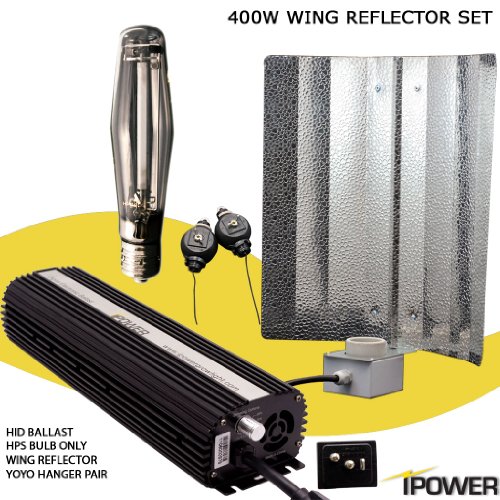
We all grew up in Hydroponics using HID grow lights, even though we know the heat and high cost disadvantages. And, to be honest, the technology of LED Grow Lights years ago was not very good or effective for growing Hydroponics plants.

Technology for LED grow lights has improved, and manufacturers have improved the quality and spectrum. So why are so many of us still unhappy with the results, or still afraid to install LEDs as our Hydroponic lighting system?

We have all learned how to maintain Hydroponics plants grown under intense HID lights, what to do about the heat output, plant nutrients, and watering cycles. Why should anything change?

There are two big differences between HID and LED grow lights for Hydroponic lighting; the heat output and the "viewed" light intensity. There is relatively no heat output from an LED grow light, and the light intensity is based on Hydroponics plant requirements, not what our human eye perceives.

Heat from HID grow lights in an indoor grow room affects plant nutrients and watering cycles, just as if your Hydroponics plants were growing outdoors in the hot sun. Take away the heat, and plants do not need as much watering or plant nutrients.

But have you changed your routine after installing LED grow lights? Many customers I have talked to did not, and they lost their plants. When you purchase LED lights, you need to go back to square one using your Hydroponic meters for moisture and plant nutrients strength. You cannot keep the same routine and schedule; you will lose your Hydroponics plants from over-watering or overfeeding.

Over-watering will slow root development or cause root rot, stunt plant growth, and cause plant nutrient uptake issues. Check to see if the soil is drying out before watering again. Use porous grow medium, which will allow more oxygen to reach roots, increase plant metabolism and growth, and will help avoid over-watering problems.

Plant nutrients also must be adjusted in order to not over fertilize, which can also be deadly to Hydroponics plants. Start with a smaller amount of plant nutrients, around half of the amount recommended by the manufacturer. Keep a close eye on the growth pattern and color of your Hydroponics plants and adjust the plant nutrients until the growth rate and color are normal. It is absolutely a pleasant benefit to save money on water and plant nutrient costs also.

Light intensity from an LED grow light is a big difference also. LEDs do not give off a bright light glare like HIDs and electric lights have, which does not mean they are not good for your Hydroponics plants. The spectrum provided for the Hydroponics plants is, again, more like growing your plants outdoors in soil and sun. The plants will grow a little slower, which will take more patience. However, since the spectrum provided by LED lights is more specific to your Hydroponics plants needs, they will absorb the light they require and grow healthier.

Most manufacturing specs show an allowable height of 6' to hang your LED grow lights from your plants. The proper height for maximum benefits when growing tall Hydroponics plants should not exceed around 3'. If you keep your plants pruned and cropped, the light intensity will be strong enough to cover the plant canopy from top to bottom for 5' Hydroponics plants, which is what we all strive for.

If you feel more comfortable with a transition while you convert from HIDs to LEDs, you can experiment with your Hydroponic lighting until you achieve the exact results you are looking for. Use your HID lights for a few hours each day, then use your LED lights for about 10 hours a day. The money you save will still be close to 50%, your HID bulbs will last longer, and your Hydroponics plants will receive the spectrum advantages from LED grow lights. There are also some experiments being conducted, with some initial success, with running the LED grow lights for 24 hours a day, and seeing up to 40% more growth. The Hydroponics plants did not seem to be affected without the day/night cycles.

Give LED grow lights a chance. Get to know their quirks and capabilities, just like we had to do with HID grow lights. Change your Hydroponic lighting to LEDs or a combination of both, change your plant maintenance habits, and save that money every month. With proper installation and plant maintenance, you will become a believer in LED grow lights!

Using a LED grow light properly will produce healthy Hydroponics plants and save you up to 80% in electric costs, in addition to the savings realized from bulb replacement, grow ballasts, large light reflectors, plant nutrients and water. Hydroponics and LED lights are the future for gardening and crops.


Article Source: http://EzineArticles.com/3797336